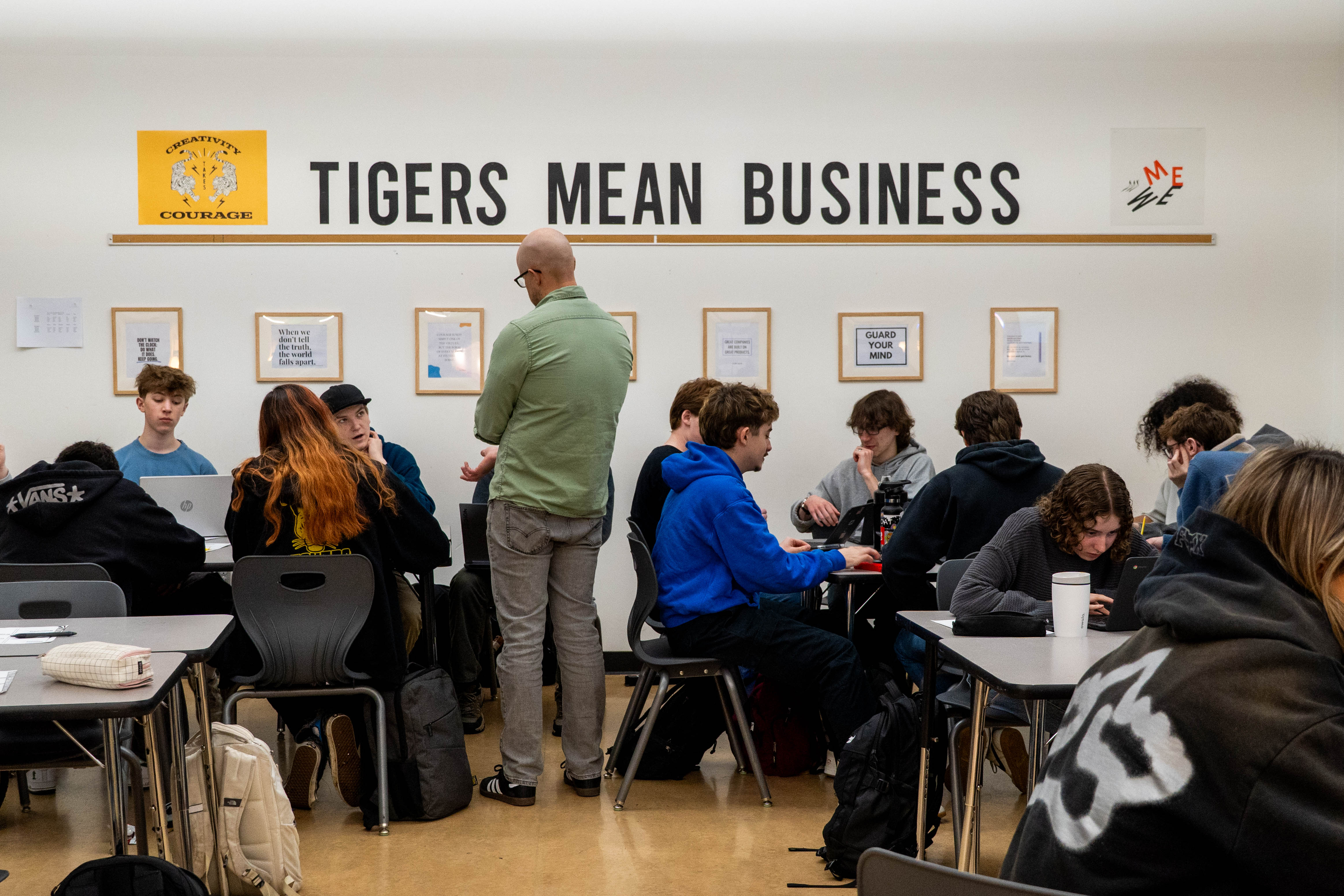
NEWBERG, Ore. — It would be easy to walk by the entrepreneurship class at Newberg High School and not fully understand what’s happening inside. Students are gathered in clusters, chatting but focused. In one corner, a few students mix different syrups into soda, commenting on presentation and flavor. Another student hurries out of the room carrying two iced coffee drinks. Nearby, a student scrolls through a long, legal-looking document on her laptop.
Get These Stories First, Right in your Inbox
We send out a FREE weekly newsletter featuring the previous week’s biggest stories, upcoming events, and other local happenings. Our email newsletter is the first to know!
This isn’t an open study hall or a club meeting. It’s Newberg High School’s entrepreneurship class, part of the school’s business curriculum designed to teach students how the business world works and prepare them for the workforce — whether that means working for an employer or for themselves.
“The students are really self-sufficient,” said Alpert, speaking over the quiet hum of collaboration chatter and keyboard clicks. “They’re really engaged with what they’re working on. When they get stuck, they raise a hand, and I help them work through it.”
Alpert gestured to different groups around the room. Some business ideas are common — T-shirt designs are especially popular — while others are more unique, including car detailing, social media marketing, baked goods sales, and a student-run coffee stand. Students also operate the student store, which sells office supplies and Newberg High School merchandise, as well as a grab-and-go snack counter during lunch.
To be eligible for the entrepreneurship program, students must first complete an introductory business course, where they learn foundational concepts across multiple scales. From there, Alpert identifies students who show a particular aptitude for entrepreneurship and guides them into the pathway.
During the first several weeks, students focus on planning and strategy, developing business plans and learning to use modern business tools — from design software to accounting platforms — including a newer challenge: artificial intelligence.
“We’re focusing on teaching them how to use it responsibly,” he said. “You can tell pretty quickly when someone is trying to run their whole business using AI. We use that as an opportunity to show the importance of human guidance and how AI can be a brainstorming partner, not a replacement for important human work.”
From Planning to Building
Students either develop original ideas or bring in existing businesses. By about week six, they begin actively building their companies.
Ashlynn Sudaisar, the 16-year-old owner of Sesame Sweet Shop, said she has been running “businesses” since first grade, when she sold cookies to classmates. She opened Sesame Sweet Shop last year, selling custom cakes and other sweets through Instagram.

The class has helped her understand the legal side of entrepreneurship, including forming an LLC, which she said has opened the door to additional business opportunities. Her current task: research and apply for community markets, such as Newberg’s Wednesday Market.
“I actually like learning about how businesses work and the legal side of it,” Sudaisar said. “It’s fun, and it helps me manage my own business better.”
Students receive $500 in seed money to launch their businesses and get ongoing coaching from Alpert. The class curriculum is a mix of education and hands-on experience.
“One of the coolest parts of this class is seeing students succeed in ways they might not in a traditional classroom,” Alpert said. “That can be really discouraging for a student. But here, they see direct success because they’re excited and engaged. It shows that just because you don’t fully understand Shakespeare, it doesn’t mean you won’t be successful.”

The department’s primary revenue source is the student store and merchandise sales. Alpert said students sell general school merchandise at sporting events and parent nights and also print T-shirts and sweatshirts for clubs and athletic teams, providing consistent income.
NHS junior Cohen Matthias is the department’s sole paid employee, working as a T-shirt printing specialist. He learned about the internship after taking a business class last year and said the hands-on work appealed to him.
“It’s repetitive and easy work,” Matthias said. “But it’s cool to see the final product come out and be part of that.”
One former student has continued growing his business even after leaving the class. El Loco Dulces, owned by Emmanuel Alvarado Romero, takes gummy candies such as peach rings and gummy worms and coats them in a spiced seasoning blend. After finding success among students, Romero now sells small containers at a local barbershop and takes orders through Instagram.
Romero stopped by during lunch to give Alpert an update on the business.
“That’s exactly what we hope for,” Alpert said after Romero walked away. “What started as a fun idea is now part of his life. He’s learning so much from it, and that’s what we want to see.”
Alpert said that even if students don’t leave the class ready to run their own businesses, they gain a stronger understanding of how business works and how they can participate successfully — whether in college, future classes, or as employees.
Others may hit the ground running.
“You never know where the next idea will come from,” he said.