NEWBERG, Ore. — Two major wine industry reports released over the past month suggest U.S. wineries are entering a long-term “correction” driven by rising costs and shifting consumer demand — a transition with direct implications for Newberg and Dundee, where wineries help fuel jobs, tourism, and downtown activity.
Get These Stories First, Right in your Inbox
We send out a FREE weekly newsletter featuring the previous week’s biggest stories, upcoming events, and other local happenings. Our email newsletter is the first to know!
The reports — the InnoVint 2025 State of Winery Health survey and Silicon Valley Bank’s 2026 State of the U.S. Wine Industry Report — do not describe an industry in freefall. Instead, both point to a market where many producers feel increased pressure, fewer say they are thriving, and growth depends less on walk-in tourism and more on retaining customers and building long-term relationships.
This comes after a relatively strong 2025 vintage, according to local winegrowers.
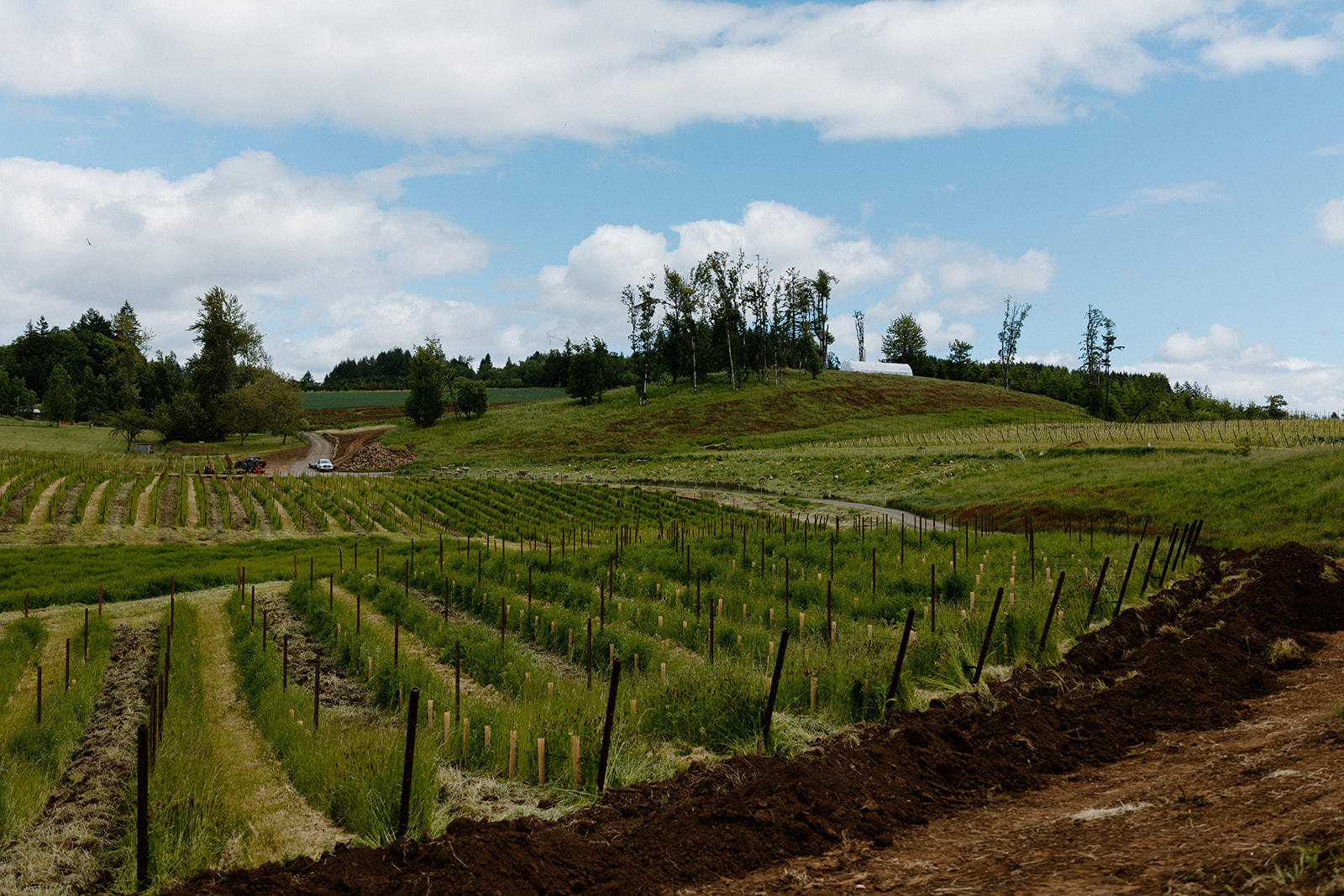
“The wines are showing really well already,” said Daniel Warnshuis, owner of Utopia Wines in the Ribbon Ridge AVA. “The heat wave was actually nice. It accelerated the ripening and really let the flavors develop quickly. There was plenty of moisture in the soil, which I think really facilitated that. So it allowed us to harvest a little earlier than we usually do, but still be fully ripe and have the flavor development that we wanted.”
Warnshuis said the 2025 growing season at his site produced wines that are “fruit-forward” with “good acid,” “nice structure” and “lushness on the palate,” finishing “clean, fresh and balanced.”
“It’s almost like that’s the table stakes nowadays,” Warnshuis said, describing the Willamette Valley’s consistency in producing high-quality pinot noir. “We’ve gotten so good at what we do … we’re very consistent vintage to vintage.”
But great wine alone is no longer enough to guarantee easy sales.
Fewer wineries say they’re thriving
The State of Winery Health report found that only 45% of winery professionals rated their business health as “great” or “excellent,” down from 56% the year before — a sign of widespread caution even as most wineries remain in operation.
SVB’s report echoes that sentiment, arguing the broader issue is not a single bad year but a longer-term shift in consumer behavior. SVB estimates U.S. wine volume ended 2025 at about 329 million cases, down from 335.9 million in 2024, with industry revenue declining again to around $74.3 billion. SVB forecasts a “bumpy bottom” and says a more durable recovery is unlikely before 2027–28, and even then, the market will look different than it did a decade ago.
Lucia Walker, president of the Dundee Hills Winegrowers Association, said that framing reflects what she is hearing locally.
While I remain a positive person, our reality is that this is a correction period that will take time to settle down,” Walker said. “There are multiple challenges the industry is facing, but from my experience, the focus here is that there’s a new type of adulthood now. There’s less interest in checking the boxes of buying a home, having a partner, and having kids that impacts household spending.”
Demand is changing
SVB points to demographic shifts as a key driver of declining demand: Baby Boomers are aging out of peak wine consumption years, while younger consumers drink less alcohol overall and have more beverage options than previous generations.
Walker, who grew up around Oregon’s wine business through her family’s former Portland distributor, Lemma Wine Co., which closed in 2018, and now works part-time in the tasting room at Carlton’s Résonance Wine, said the challenge is meeting younger consumers where they are.
“The younger generation is curious, and they’re looking to connect,” she said. “What doesn’t change generation to generation is the need to connect with each other, and we continue to believe that wine is best enjoyed breaking bread and sharing a bottle at the table.”
She said wineries and regional organizations are leaning more heavily into storytelling and approachable marketing, including short-form video and more direct consumer engagement.
But younger consumers often have less spending power, and Willamette Valley wine’s pricing is part of the tension. Many area wineries sell premium, high-scoring wines at premium prices, often well above grocery-store offerings.
Warnshuis said that pricing can be a barrier for younger buyers who are still establishing themselves financially. At the same time, wineries face rising input costs, from labor to production materials and packaging. Both reports suggest consumers are more price-sensitive than they were a few years ago, limiting how much wineries can raise prices without losing sales.
Historically, out-of-state and international tourists were more willing to pay those prices. With tourism down — particularly international travel — wineries are rethinking their strategies.
Tourism hasn’t disappeared, but it has changed
Both reports suggest wineries can no longer rely on the “if we build it, they will come” era of tasting-room demand, especially as visitors become more selective with spending.
“You can’t just throw up a sign anymore, and people come out,” Warnshuis said.
Even traditional peak weekends like Memorial Day have become more diluted as more wineries and experiences compete for the same visitors, he said.
SVB’s report shows direct-to-consumer sales still make up the majority of revenue for many wineries. In SVB’s regional breakout, Oregon wineries average about 56% of revenue from direct-to-consumer channels — tasting rooms, clubs, and on-site sales — underscoring the importance of visitor experience and customer retention.
Warnshuis said he is adjusting his marketing approach, from making his website more mobile-friendly to sharpening brand messaging and shifting Utopia’s wine club toward experience-based offerings.
“You’ve got to get creative,” he said. “Something like a pig roast instead of just telling people we’re going to taste some barrels. It’s going the extra mile that customers will remember and tell their friends about.”
Marketing, retention, and collaboration
Warnshuis said a major focus for Utopia is reducing friction and finding new ways to bring customers back, including redesigning the website, simplifying online ordering, using QR codes in the tasting room, and revamping wine club tiers.
“It’s all marketing,” he said. “Creative ways to create a better value proposition for visitors.”
Walker described similar priorities at the regional level, including sharing analytics with member wineries and creating more opportunities for smaller, practical conversations among producers, though she noted most associations are volunteer-run and limited in capacity.
She also pointed to in-person connection as a modern strategy: bringing multiple producers together, allowing consumers to taste wines side by side and meet winemakers directly. The Dundee Hills association, she said, has hosted collaborative dinners, including an upcoming Chardonnay-focused event featuring multiple producers.
Warnshuis said small wineries can offer something that is difficult to replicate at scale: a direct, personal experience.
“Not all wineries are the same,” he said. “Smaller wineries are eager to give consumers a real experience, not just a beverage.”
Walker put it more simply when asked how locals can help.
“Go get to know the people,” she said. “Our industry — and Oregon as a whole — has been really good about reminding people to support local and what that means for our economy. This is a good chance to remind them again.”
Methodology and sources
The 2025 State of Winery Health report is based on responses from more than 500 winery professionals and focuses on self-reported business health, profitability pressure, sales channels, staffing, and operational challenges. Of the 500 wineries surveyed, 30 were from Oregon.
Silicon Valley Bank’s 2026 State of the U.S. Wine Industry Report, in its 25th year, combines its annual winery survey with national sales and shipment trends, direct-to-consumer benchmarks, inventory and wholesale conditions, and demographic analysis to forecast demand and identify strategies associated with higher-performing wineries.