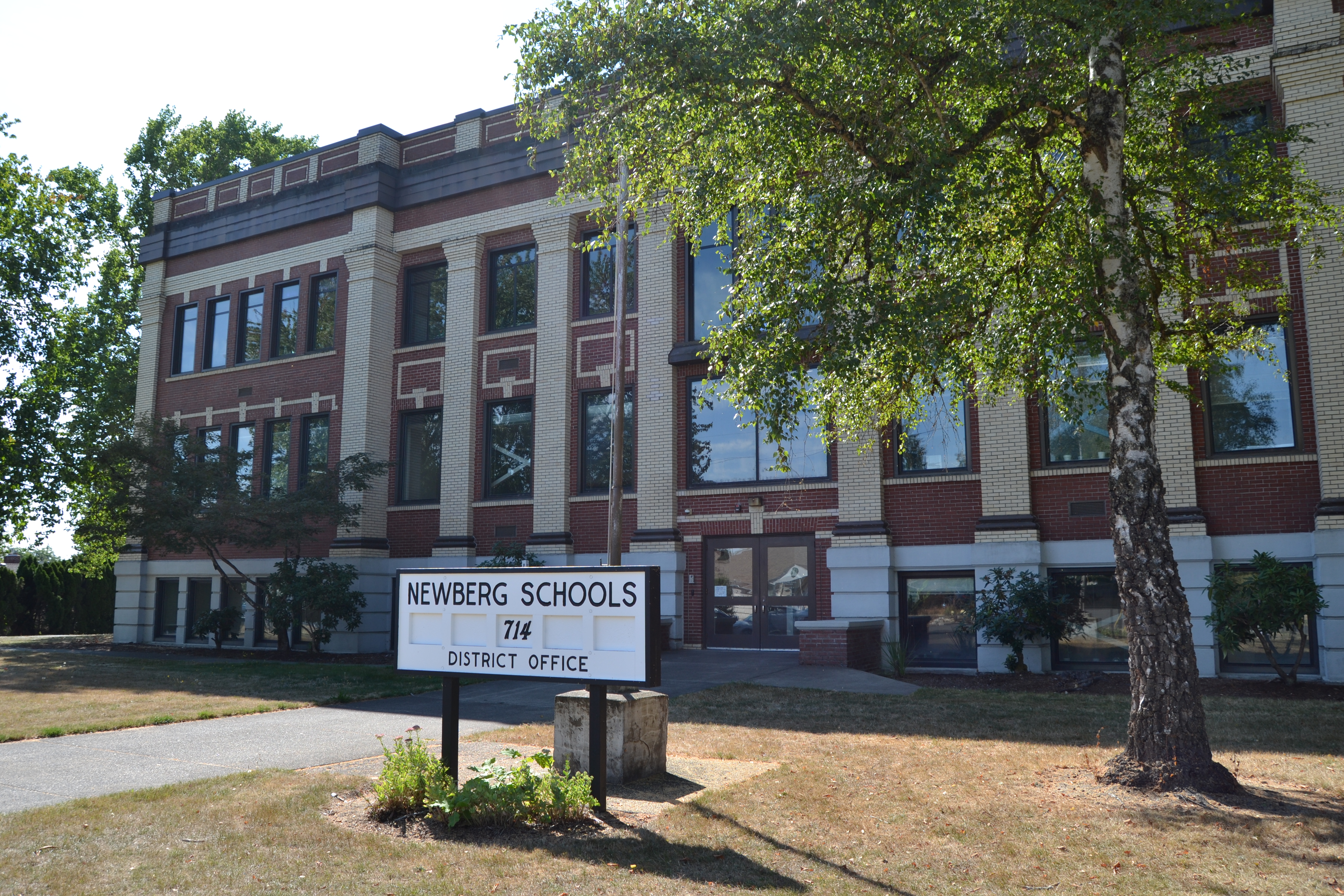
NEWBERG, Ore. — The Newberg-Dundee School Board has received recommendations from its Boundary Committee outlining potential grade reconfigurations and funding options, but no decisions have been made, district officials said.
Get These Stories First, Right in your Inbox
We send out a FREE weekly newsletter featuring the previous week’s biggest stories, upcoming events, and other local happenings. Our email newsletter is the first to know!
The Boundary Committee formally presented its findings earlier this week, marking a shift from internal deliberations to broader community discussion, according to the Newberg-Dundee School District. School board members have not taken action on the recommendations.
The committee was tasked with reviewing enrollment trends, class-size stability, school boundaries, and long-term financial sustainability. It met five times between October and January, examining multiple models and tradeoffs with an emphasis on supporting students both now and in the future.
Among its recommendations, the committee proposed a grade reconfiguration, which would change which grade levels are taught at each school rather than redraw attendance boundaries.
Under the proposal, the district would shift to a K-4, 5-6, and 7-8 structure, with some schools serving different grade ranges than they do now.
The changes are intended to create more stable class sizes and staffing as overall enrollment continues to decline, the district said. The committee also recommended that the board consider pursuing a local option levy to help maintain neighborhood schools and avoid more disruptive structural changes.
District leaders emphasized that the recommendations are options for consideration, not final decisions.

According to the committee, enrollment is expected to continue decreasing as larger graduating classes leave the system, even though incoming class sizes have remained relatively consistent. Uneven enrollment across schools — particularly at elementary campuses with two or fewer teachers per grade level — has contributed to unstable class sizes, blended classrooms, and staffing challenges.
The committee concluded that boundary adjustments alone would not fully resolve those issues and that additional local revenue could significantly expand available options.
Superintendent Dave Parker said the district’s next phase will focus on community education and engagement. Parker is scheduled to meet with parent groups and staff at every school to share the information presented to the board, explain the rationale behind the recommendations, and gather questions and concerns.
Questions raised during those meetings will be compiled into a frequently asked questions document to be shared through future meetings and digital channels, Parker said.
Upcoming informational meetings are scheduled for Jan. 20 at 6 p.m. at Mountain View Middle School; Jan. 22 at 6 p.m. at Joan Austin Elementary; Jan. 23 at 5 p.m. at Dundee Elementary; Jan. 26 at 5 p.m. at Ewing Young Elementary; and Jan. 29 at 6 p.m. at Antonia Crater Elementary.
District officials said families are encouraged to attend their school’s meeting to better understand the context of the recommendations and provide input before any decisions are made.