NEWBERG, Ore. — On June 16, an updated Street Tree List was presented to the Newberg City Council to replace the original 1992 list and reflect current best practices in urban forestry. The list is on the council’s consent calendar and is scheduled for formal approval during the July 21 city council meeting.
Get These Stories First, Right in your Inbox
We send out a FREE weekly newsletter featuring the previous week’s biggest stories, upcoming events, and other local happenings. Our email newsletter is the first to know!
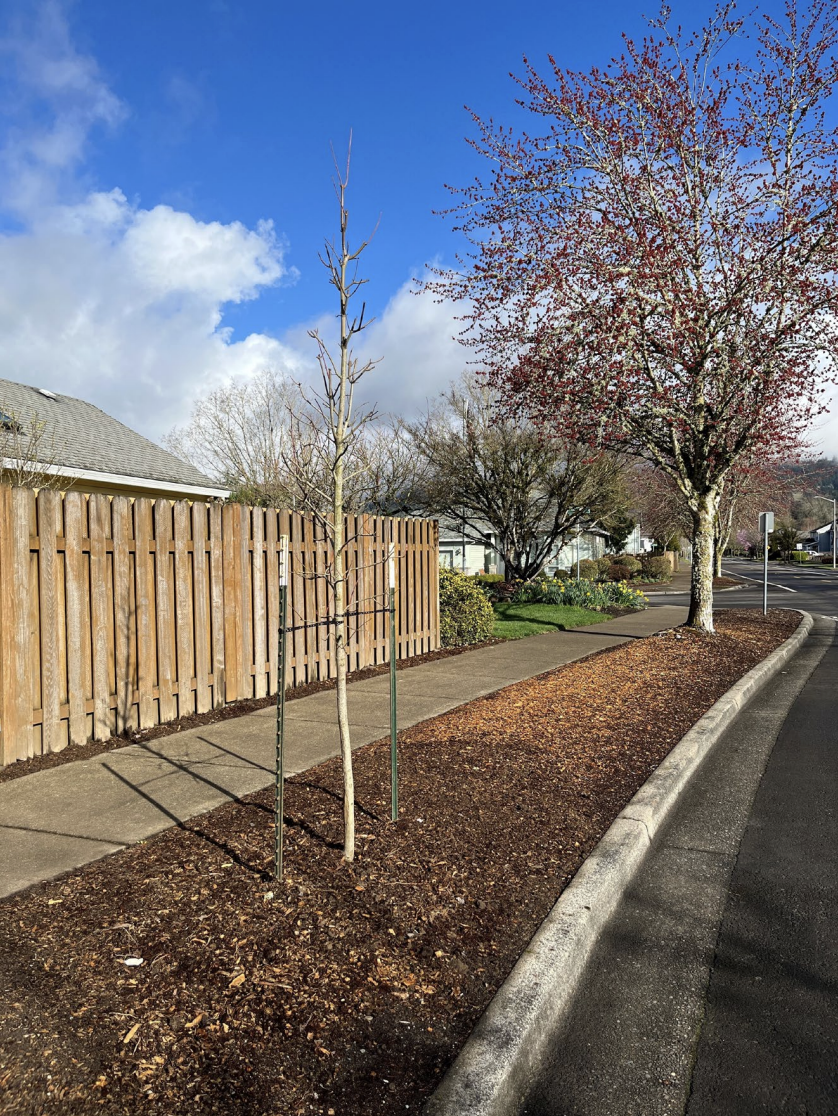
The state of Oregon defines urban forestry as the care and management of trees in cities. Because trees take years to mature, planting one is a long-term investment—especially in a changing urban environment. Species that start small can eventually crack sidewalks or crowd underground pipes, and shifting climate conditions can affect species differently.
City Manager Will Worthey said the current tree list had been questioned in recent years, prompting staff to dedicate time and resources to develop an updated version based on modern research.
“For the last four years, staff have been hearing that the tree list is full of inappropriate species,” Worthey said. “It contains some tree types that aren’t the best for this location in terms of climate and are not ideal for planter strips, with surface roots that damage sidewalks and cost homeowners money.”
Worthey said the city only recently had the capacity to address the issue and expressed support for the new list.
“The list is easy to use, approachable, clearly labeled, and well-designed,” he said. “I think residents are going to love it.”
Leanne Wagener, a member of the City of Newberg planning team, led the project. She holds a degree in landscape architecture from the University of Oregon and worked in landscape architecture and planning for about 10 years. She said compiling the new list took about three months.
“My vision was to create a list that is a living resource, built over time and based on community consensus,” Wagener said. “The tree list is an effort to get the right tree in the right place. Planners need to think of trees as critical infrastructure and plan for them at the same time we plan for utility lines, sidewalks, and other elements in the right of way.”
She said the original list lacked variety and included species that should no longer be planted—such as Oregon ash, which is under permanent quarantine due to the Emerald Ash Borer presence in Oregon. The new list prioritizes trees that perform well in urban areas, resist disease, and are tolerant of drought and climate change.
From Wagener’s perspective, the old list placed aesthetics above sustainability.
“The old list highlights random aesthetic qualities, but that’s not the critical element for getting the right tree in the right place,” she said. “Best urban forestry practices encourage diversity and species that thrive—especially in light of climate change and urban conditions—while also being mindful of pests that target specific species. The old list was a bit anemic overall.”
Wagener confirmed that the new list will not be applied retroactively and that the city has no plans to remove healthy trees.

“We depend on trees for oxygen, air purification, and shade in a warming climate,” she said, while emphasizing a protective approach to urban forestry. “At the same time, we’re making room for contextual situations where folks need to replace trees due to pests, infrastructure issues or utility conflicts. Anything that hasn’t been deemed hazardous can stay.”
The outdated tree list gained attention during the controversial removal of the Memorial Park redwood—an 80-year-old tree whose roots had begun damaging underground storm mains.
Worthey reiterated the city’s commitment to only removing trees when necessary.
“If there is a tree that is actively causing infrastructure to be destroyed—especially if it impacts Americans with disabilities—we’ll take action,” he said.
When trees do need to be replaced, both Wagener and Worthey said the city follows the same permitting process required of private residents. As part of her work on the list, Wagener spoke directly with homeowners across Newberg.
“I’ll go out and talk with them to understand their circumstances, their physical and financial realities, and offer the guidance they need to make informed choices,” she said. “The knowledge I have needs to be adjusted to this particular community—understanding what people need and what they’re experiencing.”
The updated list includes detailed information about each tree varietal, including links to local data, and specifications such as mature size, required planting space, drought tolerance, drainage needs, and suitability for planting near power lines.
Examples of species removed from the 1992 list include the Callery pear, deemed too prone to breakage; Flowering Dogwood, not tolerant of dry urban conditions; Sourwood, not suited to urban environments; and Vine maple, which can block sight lines.
New species added to the list include Texas redbud, a heat- and drought-tolerant cultivar; ‘White Shield’ Osage Orange, a durable, heat- and drought-tolerant tree with strong wood; Wireless Zelkova, hybridized to grow under power lines without interference; and Tulip Tree ‘Little Volunteer’, a smaller varietal that offers the benefits of the larger tulip tree while fitting under power lines.
The updated street tree list is expected to evolve over time as new data and urban forestry practices become available.
“As time goes by,” Wagener said, “a species might become invasive—it might be perfectly appropriate at one time and problematic later if overused or planted irresponsibly. Lists like this have to be updated to reflect that kind of data. It’s just part of stewardship and responsible planning. Plants are powerful.”